The 18% Shift: Travellers Are Moving From OTAs to Direct Booking — Are You Capturing Them?
The Quiet Comeback of Direct Booking
After a decade of OTA dominance, a measurable shift is underway. Eighteen percent of travellers who start their search on an OTA now end up booking directly with the hotel — up 3.3 percentage points in a single year. The traveller psychology has changed: guests want control, clarity on cancellation, the room they actually want, and direct contact with the property if something goes wrong.
The catch is that this shift only converts if the direct booking surface can support it. Travellers who arrive at your direct site after shopping on Booking.com or Expedia carry a clear comparison point — and your site has roughly 90 seconds to prove it's the better choice than the OTA tab still open in their browser.
What the OTA-Trained Traveller Now Expects
A traveller arriving from an OTA carries three implicit expectations:
1. Equal or better price
Rate parity is the price of entry. If your direct site lists the same room at a higher price than the OTA they just looked at, the booking goes back to the OTA — full commission and all. Hotels still struggling with rate parity in 2026 are quietly subsidising OTA shareholders.
2. Better terms
Free cancellation, flexible date changes, lower deposits, room-type guarantees — these are how direct earns its premium. The traveller already knows what the OTA is offering. Direct needs to be visibly better on at least one dimension.
3. A faster booking experience
OTAs have spent a decade engineering their checkout to be ruthlessly efficient. If your direct booking engine still requires more than three steps, asks for a password reset mid-flow, or hides taxes until the final screen, the traveller defaults back to the channel that worked.
Three Technology Gaps That Lose the Shift
Slow loading on mobile
More than 60% of hotel searches now happen on mobile, and Google's data shows the average mobile site that takes longer than three seconds to load loses 53% of visits. Your booking engine and primary landing pages need to load in under 2.5 seconds on a mid-range smartphone over a 4G connection — measured at the median, not the best case.
Booking abandonment without recovery
A guest who reaches your booking engine and doesn't complete is the most valuable visitor your site sees all month. They had clear intent. Most hotels capture nothing from that visit — no email, no abandoned-cart sequence, no targeted retargeting ad. OTAs capture every one of those signals on your behalf, then resell that traveller back to you under their commission.
No room differentiation on the booking page
When OTAs list your property they show every room type clearly with photos, amenities, and a price. When your direct booking engine displays the same selection as a flat list of names and prices, the traveller cannot see why they should pay €30 more for the Junior Suite over the Standard. Differentiation is what justifies direct's price advantage on rate parity.
What to Audit on Your Direct Booking Surface This Quarter
Walk through your own booking flow as a guest would — on a mobile phone, ideally over a slow network. Time each step.
Search through to confirmation should be under 90 seconds
Anything longer and you are losing OTA-trained travellers at every additional friction point.
Every rate should explain its inclusions clearly
"Member rate" or "Best available" without context confuses guests who are comparing against OTA pricing they already understand.
The booking engine and the website should feel like one product
If clicking "Book Now" launches a third-party booking engine with different fonts, colours, and a different cart flow, the trust signal breaks at the moment of conversion. Modern direct booking platforms surface inside your domain and visual identity.
Post-booking confirmation should arrive within 30 seconds
Delayed or template-default confirmations create doubt about whether the booking succeeded — and doubt sends guests back to the OTA where they at least know the booking exists.
Capturing the Shift Compounds Year on Year
Every percentage point of OTA traffic that converts directly instead has a compounding effect on margin. Lower commission cost frees budget for retention, retention drives repeat guests, repeat guests reduce acquisition cost again. The hotels that are visibly winning the 18% shift in 2026 did not intercept it accidentally — they invested in the technology infrastructure that lets a comparison-shopping guest land on the direct site and decide it is the obvious choice.
Bookassist's Booking Platform handles the conversion surface end to end: rate parity monitoring, mobile-first booking flow, room differentiation, abandoned-booking recovery, and integration with the rest of your direct-booking stack so the guest experience reads as one continuous journey. Hotels typically see a direct-booking conversion rate above 15% after onboarding.
Run the free Hotel Tech Audit on your property to see where the technology gaps that lose this shift are sitting today, and which fixes will move your conversion rate the fastest.
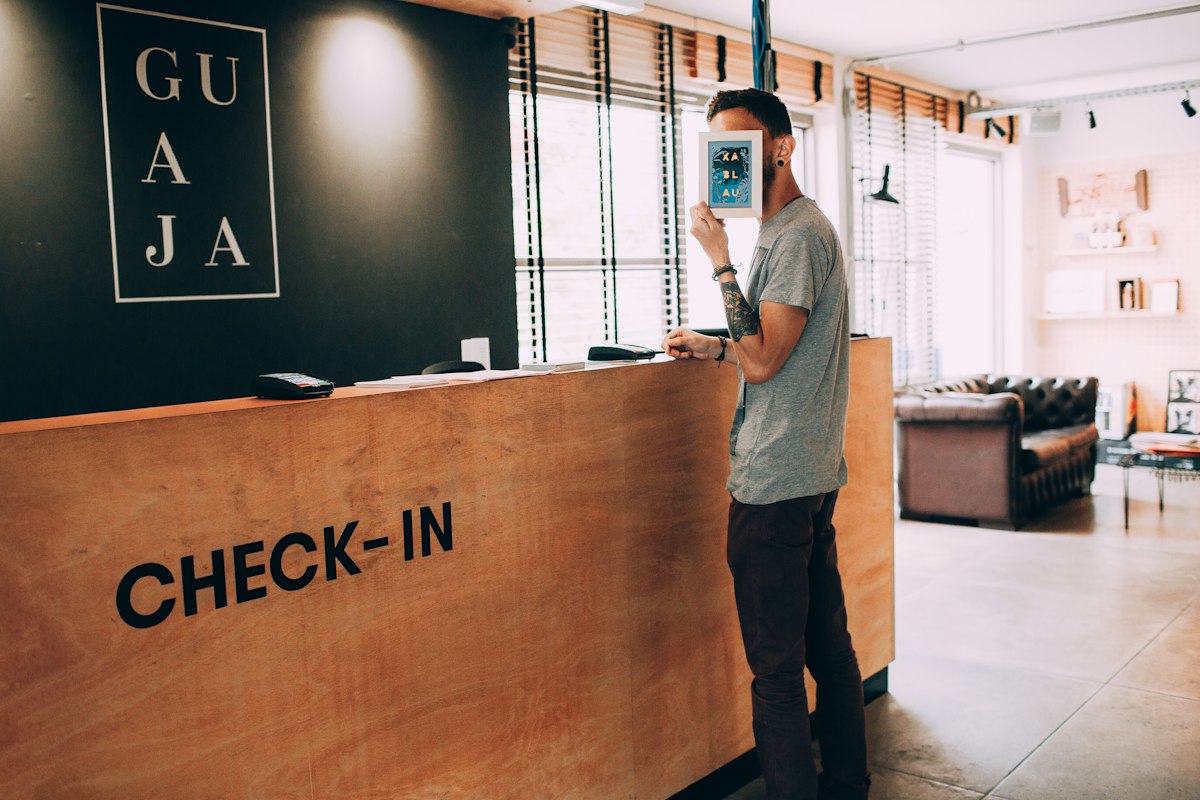
Photo by Helena Lopes on Unsplash